ProjectsFissure Playground

Fissure Playground
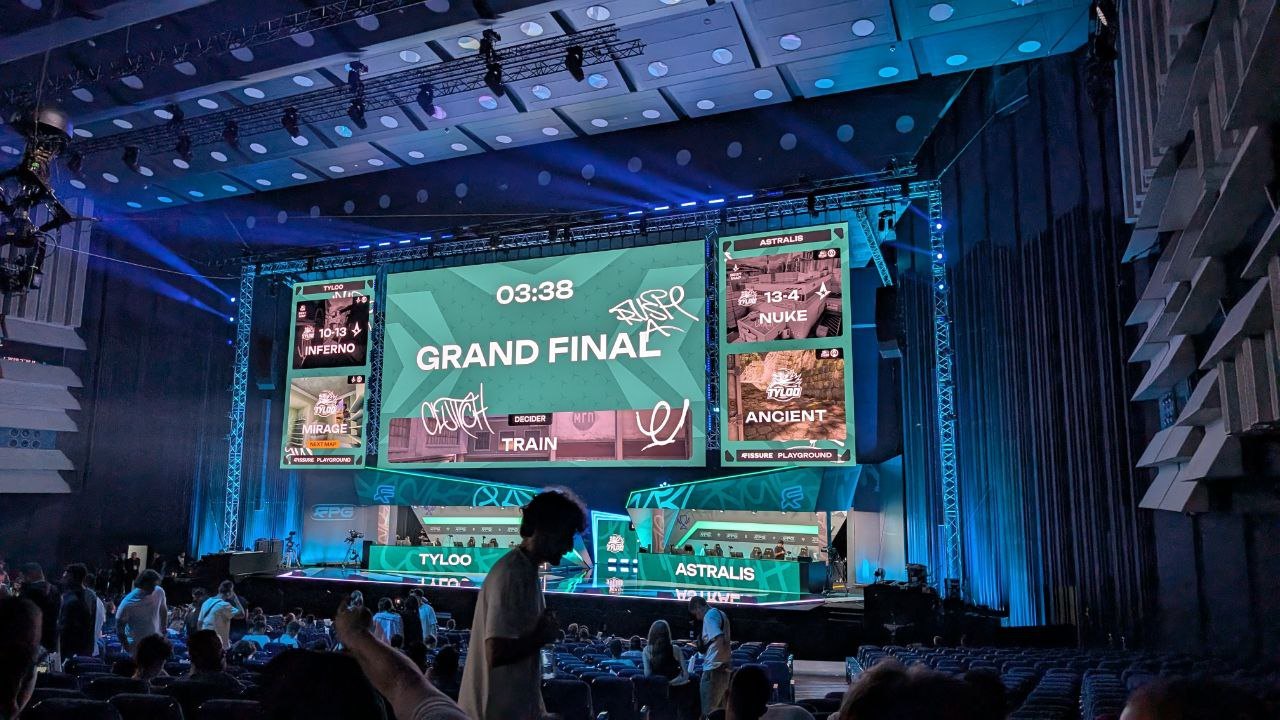
FISSURE's Tier-1 tournament series for Counter-Strike 2 and Dota 2, staged in Belgrade. I ran the visual systems and show control: six LED surfaces fed from PIXERA, one cue stack driving light, sound, video and effects, and on-screen graphics built from live match data.
Watch the show
Five segments from the FPG CS 2025 show.
- Fissure Playground CS 2025Belgrade
- Fissure Playground Dota 2025Belgrade
What I did
- A new screen signal chainFor FPG Dota I designed the video chain from scratch: three 60 Hz feeds out of PIXERA, processed in Barco E2 Gen 2, out to the LED surfaces.
- A one-button showEvery show step is one press for the playback operator. Bitfocus Companion sends the right commands to the lighting desk, the media server and sound at once, so departments stay in sync and nobody has to chase a cue.
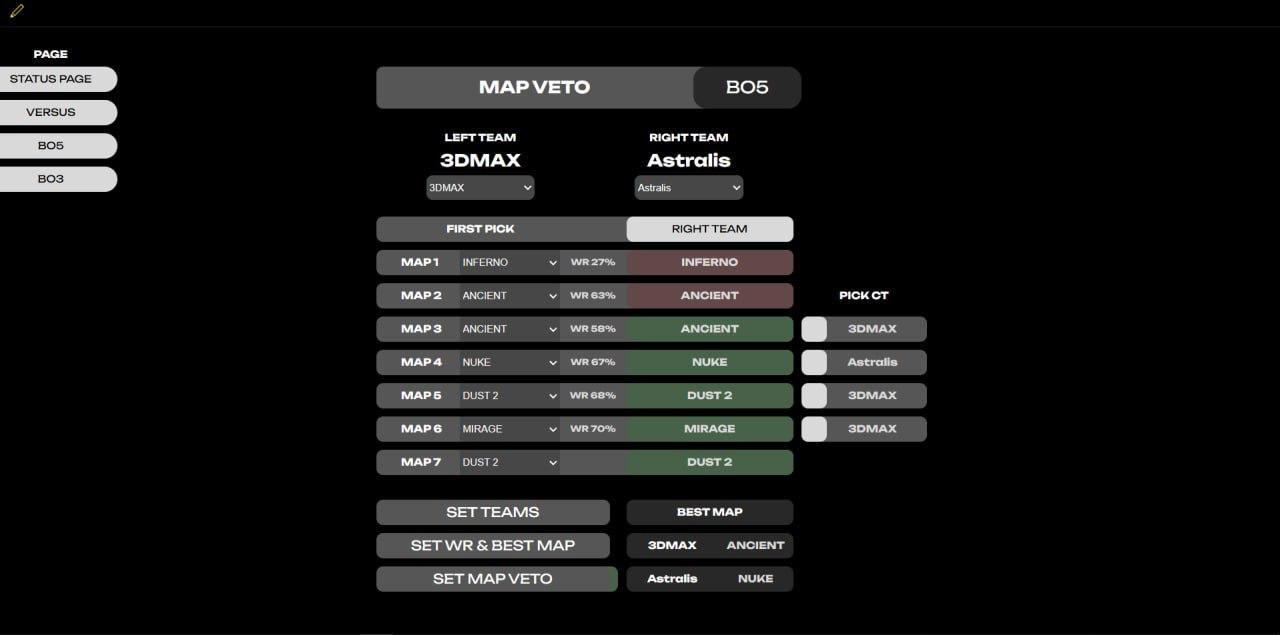
- Graphics from live dataFor FPG CS, teammate Alexander and I built a title controller. Pick two teams and the Map Veto and Next Map scenes assemble themselves: logos, picked maps, CT sides, map score and best map.
- Scripting and HUDA large set of Lua scripts in PIXERA runs the show logic, and the in-game HUD reaches the screens from OBS workstations.
The rig in numbers
Screens
6LED surfaces: main screen, two side screens, a bottom line and two player tables
23.5MPpixels across the rig, as many as about 11 Full HD screens
208m²of P2.9 LED, roughly 832 panels of 50 × 50 cm
3media-server outputs at 60 Hz feed the whole rig
Automation
30→1minutes to build the Map Veto scene once veto data arrives
1playback operator runs the whole show sequence
0extra hardware for the web-source veto scenes
Screen layout
Main screen
- Size
- Pixels
- Total
- Panels
- Pitch
- P2.9, 60 Hz
Feeds: 3840 × 2160 to the main screen, 3024 × 2688 to both side screens, 2352 × 1344 to the tables and bottom line.
Signal and control
TriggerPlayback operatorOne button per show step
ControlBitfocus CompanionCommands to every department
OutputsPIXERA + Lua, Barco E2 Gen 2Lighting desk, sound, effects
DataMap veto and match dataTeams, maps, sides, score
GraphicsTitle controller, OBS HUDScenes built from live data
ScreensArena LEDSix surfaces, one show